
How Does a Standalone VSD Single Stage Air Compressor Improve Industrial Air Efficiency?
Article Summary: A reliable compressed air system is essential for many modern factories, but conventional compressor installations can consume excessive energy, require complicated auxiliary equipment, and become difficult to maintain when production demand changes throughout the day. A Standalone VSD Single Stage Air Compressor addresses these challenges by combining variable-speed control with single-stage compression and an integrated equipment configuration. This article explains how the system works, where it delivers the greatest value, what factors should be considered before purchase, and how to improve long-term operating reliability.
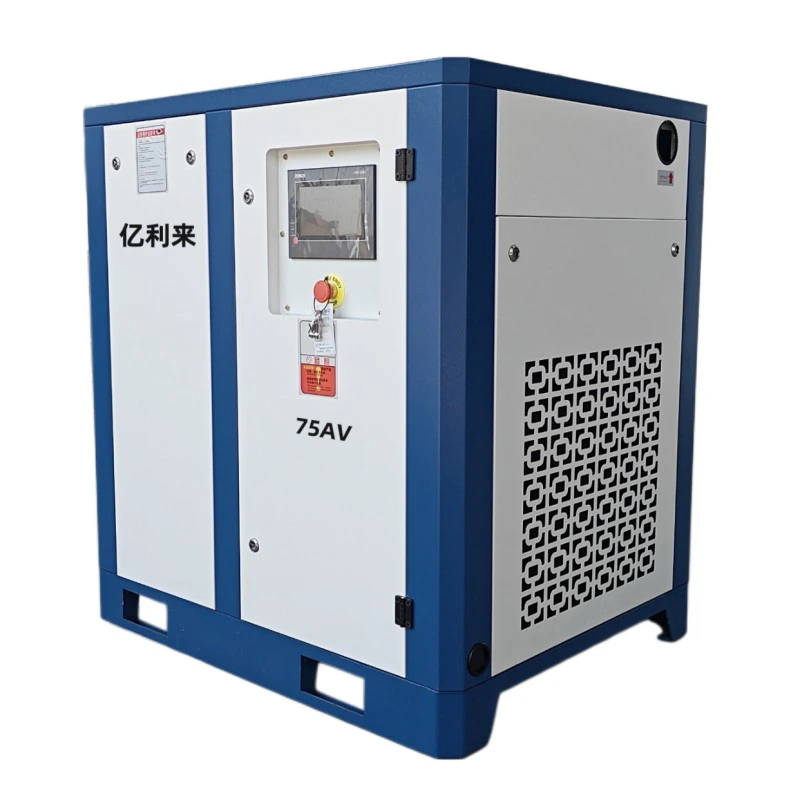
Table of Contents
- What Is a Standalone VSD Single Stage Air Compressor?
- How Does the Compressor Work?
- How Does VSD Technology Reduce Energy Waste?
- Why Does the Standalone Configuration Matter?
- Why Choose Single-Stage Compression?
- Where Can It Be Used?
- What Should Buyers Consider Before Selection?
- How Can Operating Reliability Be Improved?
- Key Benefits at a Glance
- Frequently Asked Questions
- Conclusion
What Is a Standalone VSD Single Stage Air Compressor?
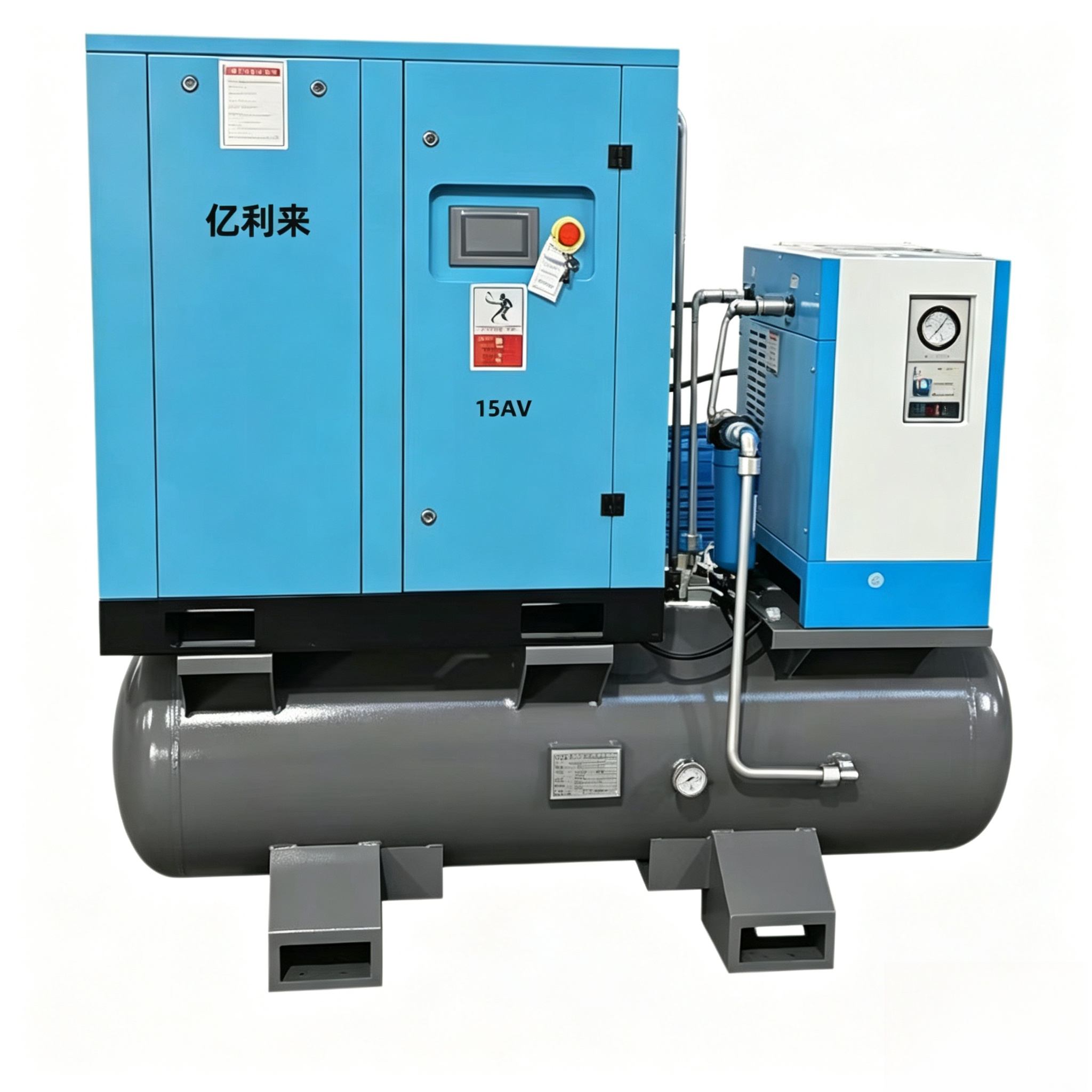
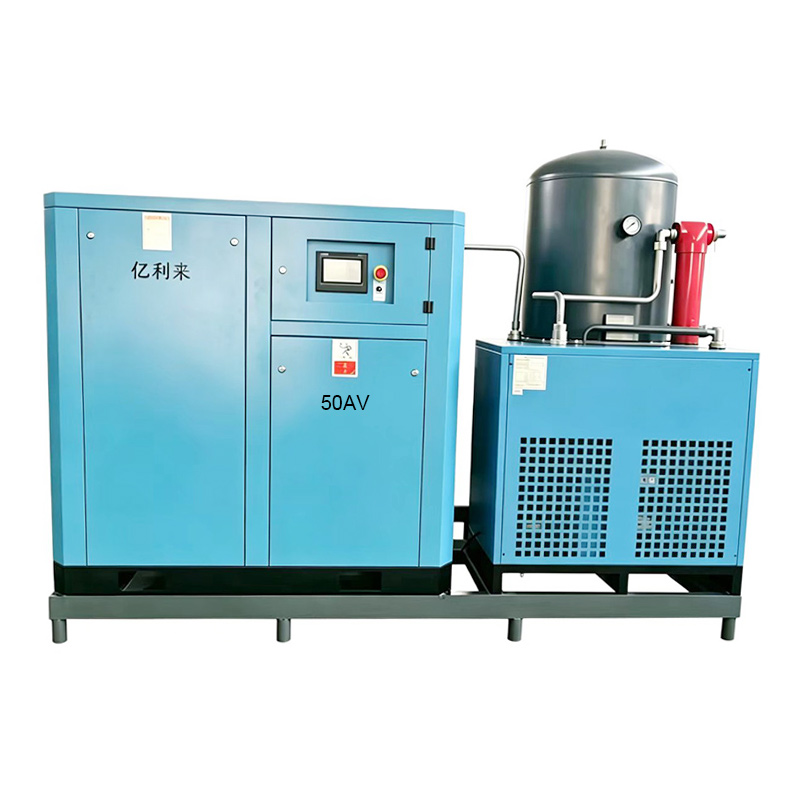
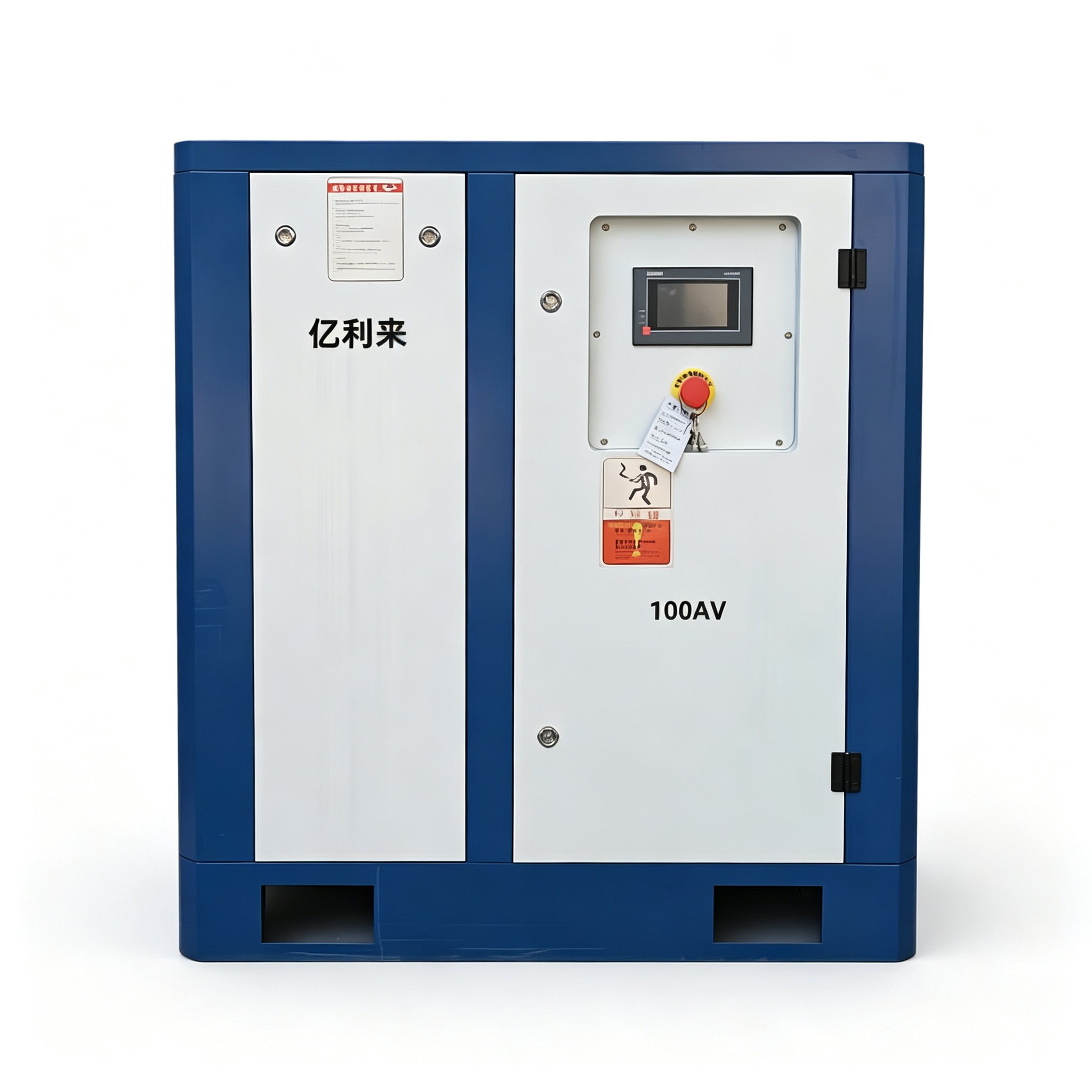
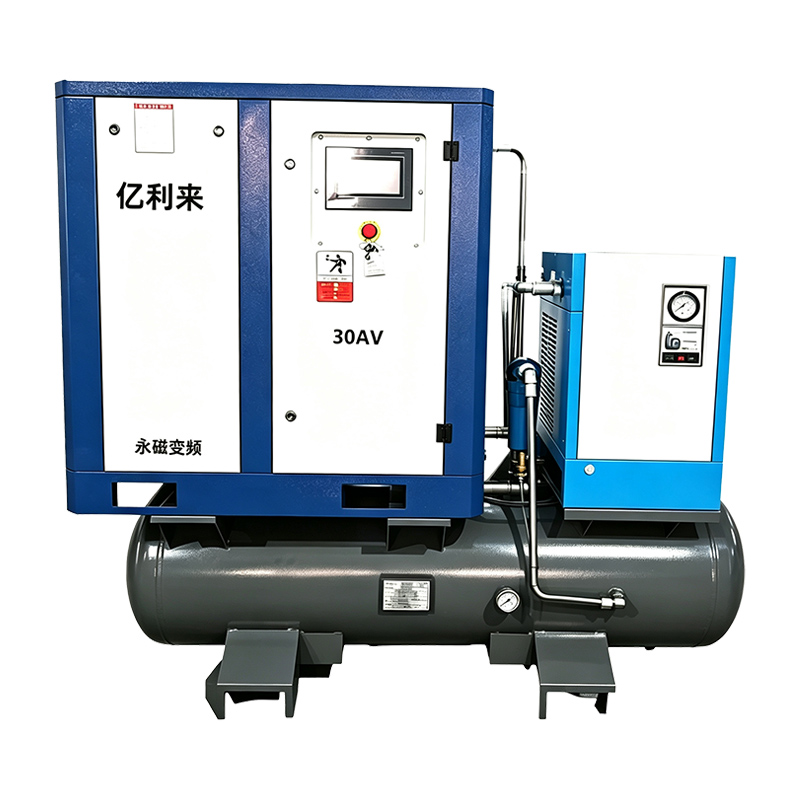
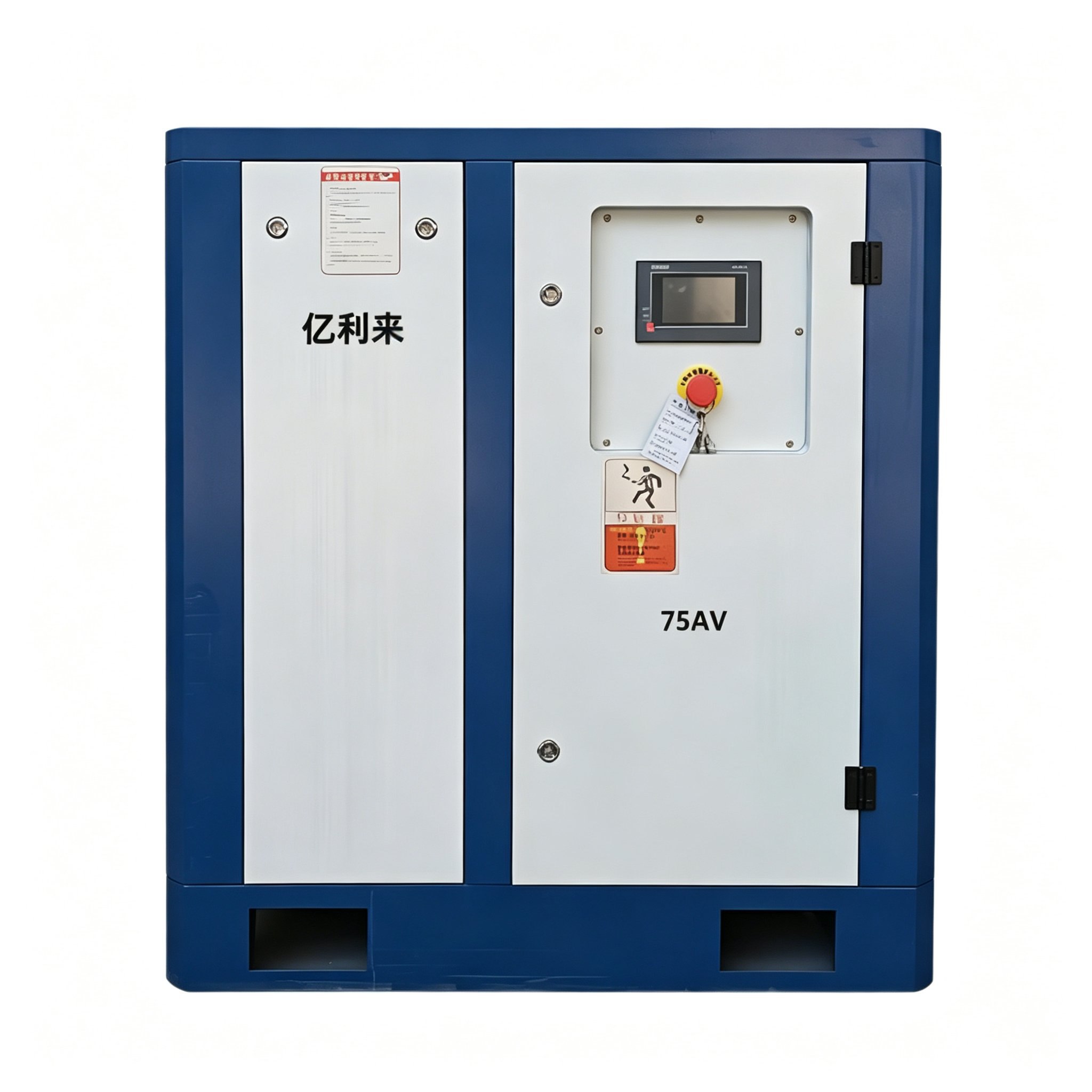
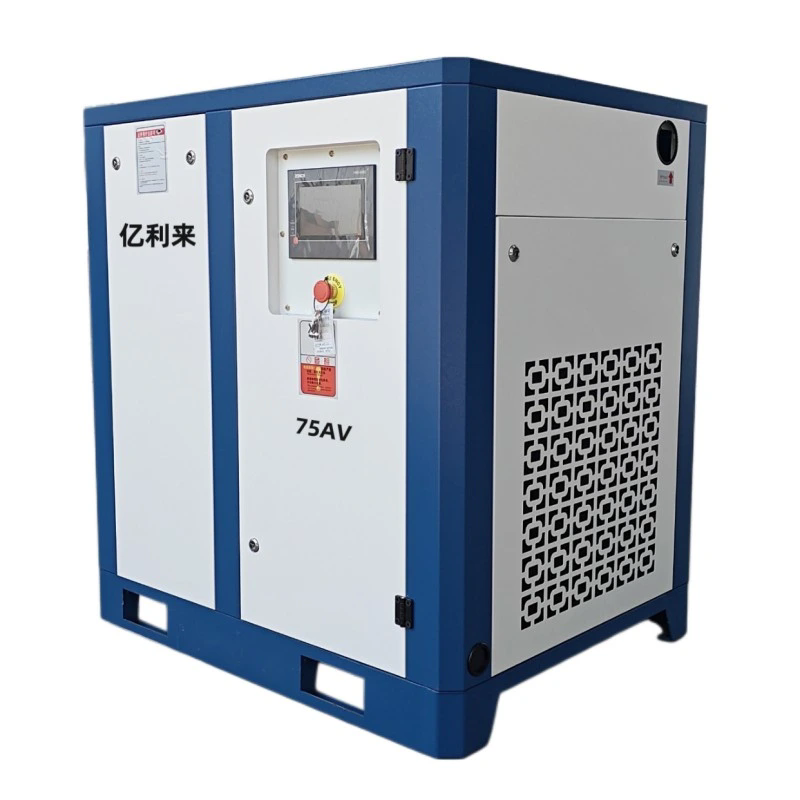
A Standalone VSD Single Stage Air Compressor is an industrial compressed-air system designed around three important concepts: variable-speed drive technology, single-stage compression, and an integrated standalone configuration.
Unlike a basic fixed-speed compressor that generally operates around a predetermined motor speed, a VSD compressor can adjust motor speed according to the actual compressed-air requirement. This is particularly useful in factories where demand changes between production cycles, shifts, machines, or operating conditions.
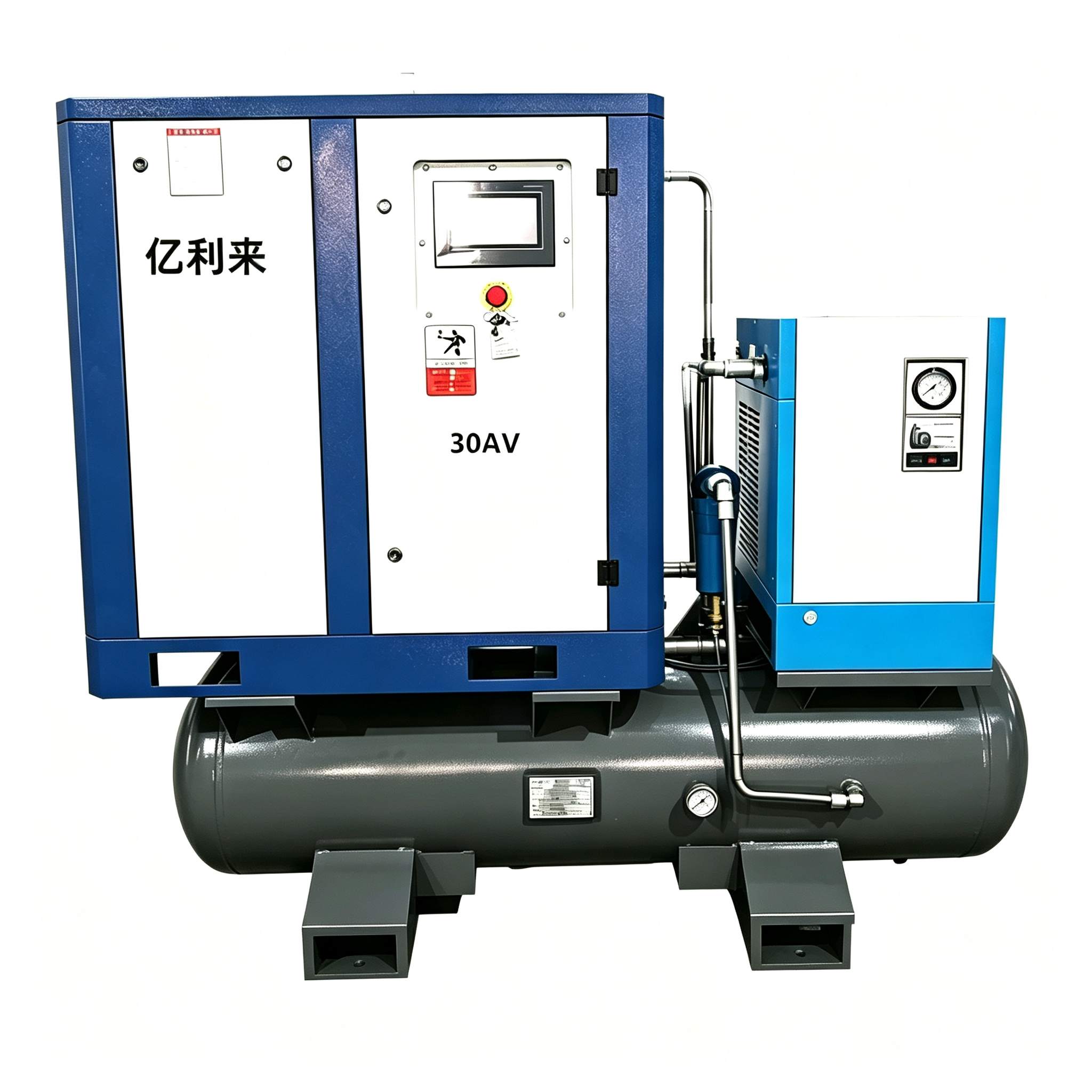
The single-stage configuration provides a relatively straightforward compression architecture for common industrial pressure requirements. Meanwhile, the standalone arrangement can combine major supporting components within one coordinated system, reducing the need for operators to assemble separate pieces of equipment.
For businesses struggling with high electricity consumption, unstable pressure, limited installation space, or complicated compressed-air infrastructure, this configuration can provide a practical alternative to traditional installations.
How Does the Compressor Work?
The operating principle is easier to understand when the system is divided into several functional stages.
- Air intake: Ambient air enters the compressor through the intake system.
- Compression: The rotary screw airend compresses the incoming air through a single compression stage.
- Variable-speed adjustment: The drive system changes motor speed according to air demand.
- Cooling and separation: Heat generated during compression is managed through the compressor's cooling and oil-management systems.
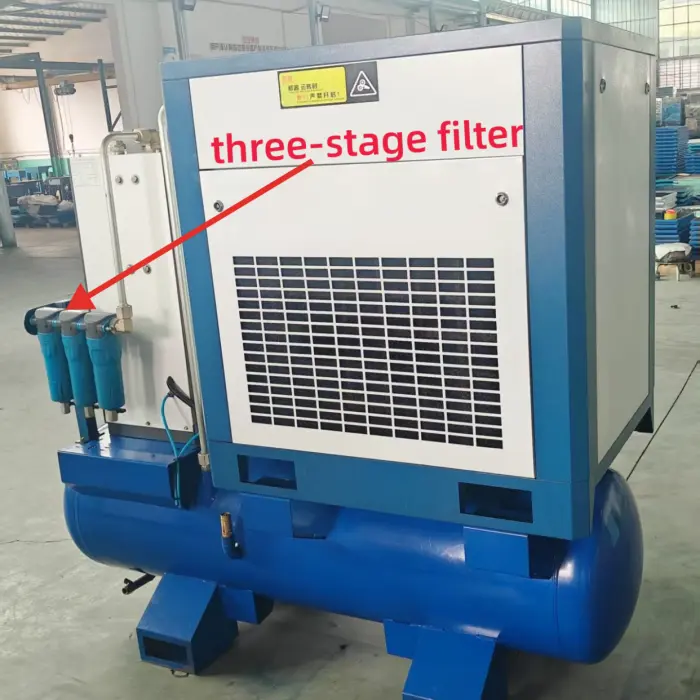
- Air treatment: Depending on the configuration, integrated drying and filtration equipment can help provide cleaner and drier compressed air.
- Air delivery: Treated compressed air is delivered to the plant distribution network.
The important difference is that the compressor does not have to operate at maximum capacity continuously. When production requires less air, the motor can reduce its speed. When demand rises, the motor increases speed to provide additional airflow.
This makes the system especially attractive for facilities where compressed-air demand is variable rather than constant.
How Does VSD Technology Reduce Energy Waste?
Energy consumption is one of the most important considerations when purchasing an industrial air compressor. Electricity can represent a significant portion of the total cost of compressed-air ownership, particularly when equipment operates for long hours.
A conventional fixed-speed compressor may continue operating at a relatively high speed even when the factory's actual air requirement has decreased. The difference between available compressor capacity and actual demand represents an opportunity for optimization.
VSD technology addresses this problem by dynamically adjusting motor speed.
| Operating Condition | Typical Fixed-Speed Behavior | VSD Compressor Response | Potential Advantage |
|---|---|---|---|
| High air demand | Operates at high speed | Increases motor speed | Supplies required airflow |
| Medium air demand | May require loading and unloading | Modulates speed | Better matching of supply and demand |
| Low air demand | Can experience inefficient operating cycles | Reduces motor speed | Lower unnecessary power consumption |
| Changing production schedule | Less flexible | Continuously adapts | Improved operating flexibility |
The practical benefit is not simply a lower motor speed. The larger objective is to make compressor output better correspond with the plant's real demand.
For facilities with significant fluctuations in compressed-air consumption, this can make a meaningful difference to operating costs over the service life of the equipment. Actual savings, however, depend on factors such as the load profile, pressure setting, leakage rate, operating hours, compressor sizing, ambient conditions, and maintenance practices.
Why Does the Standalone Configuration Matter?
Many compressed-air systems require several separate components, including compressors, dryers, filters, drains, receivers, piping, valves, and control equipment. Each additional component can increase installation work and create another point that needs to be coordinated.
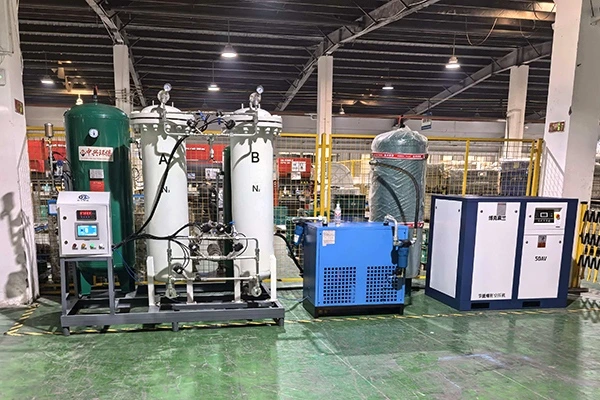
A standalone configuration is designed to simplify this process by integrating key equipment into a coordinated package.
This can provide several practical advantages:
- Simplified installation: Fewer separate components need to be sourced and assembled on site.
- Reduced footprint: Integrated equipment can be more space-efficient than a collection of independent units.
- Matched components: Compressor and supporting equipment can be selected as a coordinated system.
- Cleaner installation: A more organized equipment arrangement can simplify plant layout.
- Faster commissioning: A preconfigured package can reduce the amount of field integration required.
- Easier operation: Operators can manage major functions from a centralized control system.
This is particularly useful for manufacturers expanding production lines or upgrading an existing compressed-air room without wanting to redesign the entire system from scratch.
Why Choose Single-Stage Compression?
Not every factory requires a multi-stage compression system. For many conventional industrial applications, single-stage compression can provide an appropriate balance between performance, equipment complexity, and investment cost.
Typical applications may include general manufacturing, packaging, pneumatic automation, workshops, woodworking, assembly operations, tire service, and other processes that operate within conventional compressed-air pressure ranges.
A single-stage system can also have a relatively straightforward mechanical structure. Fewer compression stages can mean fewer major compression-stage components to inspect and maintain.
However, pressure requirements should always be evaluated before selecting the compressor. If a process consistently demands substantially higher pressure, a different compressor configuration may be more appropriate.
The correct decision should therefore be based on the actual application rather than choosing equipment simply because it has a higher nominal capacity.
Where Can It Be Used?
The flexibility of a Standalone VSD Single Stage Air Compressor makes it suitable for a broad range of industrial environments.
- Metalworking: Provides compressed air for pneumatic tools, automation equipment, cleaning, and other production processes.
- Packaging: Supports pneumatic actuators, conveying systems, packaging machinery, and control components.
- General manufacturing: Supplies plant air for multiple pneumatic applications.
- Woodworking: Supports pneumatic tools, cleaning systems, and production equipment.
- Automotive service: Provides air for tire equipment, pneumatic tools, cleaning, and workshop operations.
- Automated production: Delivers controlled compressed air for pneumatic cylinders, valves, and other automation devices.
- Centralized workshop air supply: Supports multiple points of consumption from a common compressed-air system.
The best application is one in which the required pressure and airflow are compatible with the selected compressor specification and where variable demand makes speed modulation valuable.
What Should Buyers Consider Before Selection?
Choosing the right compressor should begin with the application rather than the machine itself. A compressor that is too small may struggle to maintain pressure, while an oversized unit may increase capital cost and operate inefficiently for the actual load profile.
1. Determine Required Airflow
Estimate the total compressed-air demand of connected equipment. Consider both normal consumption and periods of peak demand.
2. Confirm Working Pressure
Identify the pressure required at the point of use. Do not automatically select a higher pressure than necessary because excessive pressure can increase energy consumption.
3. Analyze the Load Profile
Record how compressed-air demand changes during shifts, breaks, weekends, and production changes. A variable load profile is one of the strongest reasons to consider VSD technology.
4. Check Installation Conditions
Evaluate available floor space, ventilation, ambient temperature, electrical supply, air piping, maintenance access, and drainage requirements.
5. Consider Air Quality
Different industries have different requirements for moisture, oil, particles, and other contaminants. The compressor should be matched with appropriate filtration and drying equipment where necessary.
6. Evaluate Control and Monitoring Requirements
Modern industrial facilities may want compressor data integrated into plant monitoring systems. Network communication, alarms, pressure monitoring, running-hour information, and maintenance notifications can improve equipment management.
7. Calculate Total Ownership Cost
Purchase price is only one part of the investment. A more useful evaluation includes electricity consumption, maintenance, spare parts, downtime, installation, air treatment, and expected operating hours.
How Can Operating Reliability Be Improved?
Even a high-quality compressor requires appropriate maintenance. Reliable compressed air begins with correct installation and continues through disciplined operation.
- Keep cooling surfaces clean: Dust accumulation can reduce heat-transfer efficiency.
- Inspect filters regularly: Restricted filters can increase pressure losses and affect system performance.
- Monitor oil condition: Oil-lubricated screw compressors depend on suitable lubrication for reliable operation.
- Check condensate drainage: Drain systems should operate correctly to prevent moisture-related problems.
- Inspect air leaks: Leaks can waste compressed air continuously and force the compressor to work harder.
- Monitor operating temperature: Abnormal temperature changes may indicate cooling, lubrication, or operating problems.
- Review pressure settings: Avoid maintaining a higher pressure than the production process actually needs.
- Follow the service schedule: Filters, separators, lubricants, belts where applicable, and other consumable components should be serviced according to the manufacturer's recommendations.
Preventive maintenance is generally more economical than waiting for a failure that interrupts production.
Key Benefits at a Glance
| Customer Challenge | Standalone VSD Single Stage Approach | Expected Operational Value |
|---|---|---|
| Fluctuating air demand | Variable motor speed | Better supply-demand matching |
| Limited installation space | Integrated standalone layout | More efficient equipment arrangement |
| Complex system installation | Preconfigured equipment package | Simpler commissioning |
| Unnecessary pressure | Controlled operating pressure | Improved system efficiency |
| Maintenance complexity | Coordinated system architecture | Easier routine management |
| Need for production monitoring | Intelligent controller and monitoring options | Better visibility of operating conditions |
Frequently Asked Questions
What is the main difference between a VSD and fixed-speed air compressor?
A fixed-speed compressor generally operates around a fixed motor speed, while a VSD compressor adjusts motor speed according to compressed-air demand. The variable-speed approach can be particularly beneficial when demand changes significantly during production.
Is a single-stage compressor suitable for every industrial application?
No. Single-stage compression is well suited to many conventional industrial applications, but applications with consistently high pressure requirements may need a different compression configuration. Buyers should confirm pressure, airflow, duty cycle, and air quality requirements before selecting equipment.
Does VSD technology eliminate energy consumption during low demand?
No. A VSD compressor still consumes energy while operating. Its advantage is that it can reduce motor speed when demand decreases, helping avoid unnecessary energy use compared with operating a fixed-speed machine at an unsuitable load condition.
Why is air leakage important when evaluating compressor efficiency?
Compressed-air leaks represent lost production energy. The compressor must generate additional air to compensate for leakage, increasing operating hours and electricity consumption. Leak detection and repair should therefore be part of any compressed-air efficiency program.
Can a standalone compressor work with an existing air receiver?
In many installations, a standalone compressor can be connected to an existing compressed-air storage system, provided the receiver, piping, pressure rating, airflow, and control strategy are compatible with the new compressor. The complete system should be evaluated before installation.
What air treatment equipment may be required?
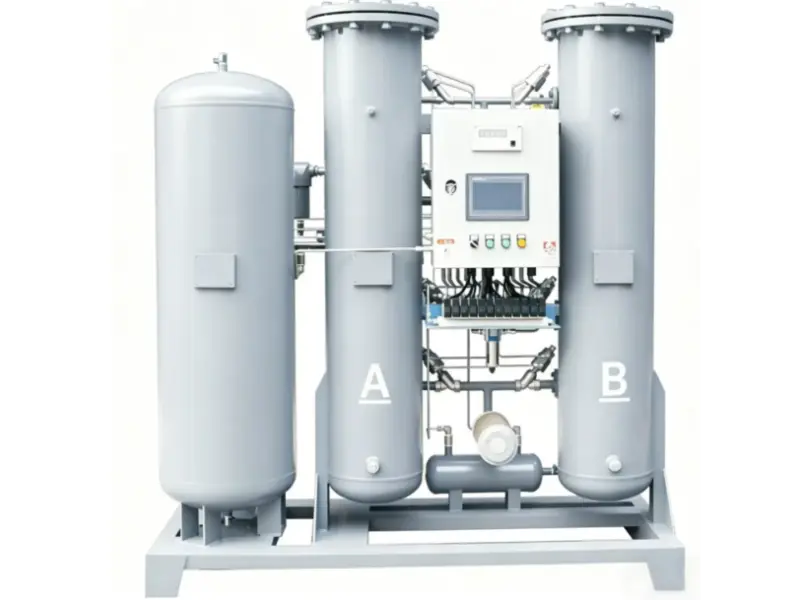
The appropriate air treatment depends on the application. Common equipment can include refrigerated dryers, coalescing filters, particulate filters, condensate management systems, and air receivers. Applications with strict air-quality requirements may require additional treatment.
How should the compressor be sized?
Start with measured or carefully calculated airflow demand and required working pressure. Then consider peak demand, future expansion, operating hours, storage capacity, and system losses. Proper sizing is more important than simply selecting the largest available compressor.
Why choose Guangdong Yili Machinery Equipment Co., Ltd.?
Guangdong Yili Machinery Equipment Co., Ltd. focuses on industrial compressed-air and gas-generation equipment and provides solutions designed around different production requirements. When evaluating a Standalone VSD Single Stage Air Compressor, customers can discuss airflow, pressure, installation conditions, air treatment, control requirements, and operating objectives with the supplier before selecting a configuration.
Conclusion
A Standalone VSD Single Stage Air Compressor can be a practical solution for factories that need dependable compressed air while seeking better control over energy consumption, installation complexity, and maintenance requirements.
The combination of variable-speed operation and single-stage compression provides a balanced solution for many conventional industrial applications. The standalone configuration can further simplify installation by bringing essential system functions together in a coordinated package.
However, the right compressor should always be selected according to actual airflow demand, working pressure, load profile, air quality requirements, operating environment, and future production plans. Correct sizing and regular maintenance are just as important as compressor technology when the goal is reliable long-term performance.
For manufacturers planning a new compressed-air system or replacing an inefficient existing compressor, working with an experienced equipment supplier can help identify the appropriate configuration and avoid unnecessary investment.
Looking for a reliable Standalone VSD Single Stage Air Compressor for your industrial application? Contact Guangdong Yili Machinery Equipment Co., Ltd. to discuss your required airflow, pressure, operating conditions, and system configuration. Contact us today for a professional compressed-air solution tailored to your production needs.
関連ニュース
メッセージを残してください